Cities around the world are grappling with deteriorating air quality, rising temperatures, and the loss of natural ecosystems due to rapid urbanization. Dense construction, vehicle emissions, and shrinking green spaces have intensified concerns around public health and environmental sustainability. In response, planners and communities are exploring innovative nature-based solutions that fit within limited urban land. Among the most promising of these solutions are urban micro forests, compact yet dense plantations designed to restore ecological balance in cities. By tackling air pollution, supporting biodiversity, and contributing to the vision of green cities, urban micro forests are emerging as a powerful tool for healthier urban living.
Understanding Urban Micro Forests in City Environments
Urban micro forests are small, densely planted forest patches typically established on plots as small as a few hundred square meters. Unlike traditional parks, these forests use native plant species planted close together to mimic natural forest ecosystems. This design accelerates growth and ecological benefits. In the context of green cities, urban micro forests maximize environmental impact within limited space. Their dense vegetation structure makes them particularly effective at absorbing pollutants, directly addressing air pollution while creating pockets of nature in otherwise concrete-dominated landscapes.
How Urban Micro Forests Reduce Air Pollution
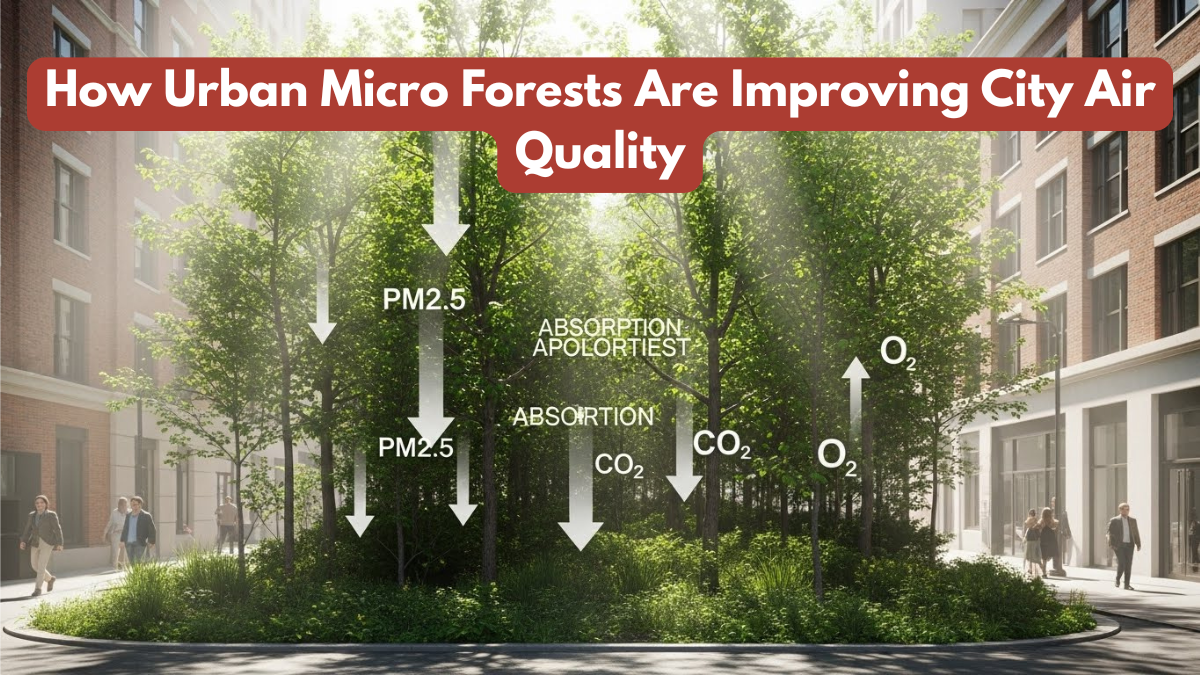
One of the most significant benefits of urban micro forests is their ability to combat air pollution. Trees and shrubs act as natural air filters by absorbing carbon dioxide, trapping particulate matter, and releasing oxygen. Because micro forests are densely planted, they provide a higher leaf surface area compared to conventional urban greenery. This increases their capacity to capture airborne pollutants from traffic and industrial activity. As cities strive to reduce air pollution, integrating urban micro forests into neighborhoods, schools, and roadside areas supports cleaner air and healthier communities within green cities.
Supporting Biodiversity Through Micro Forests
Beyond air quality, urban micro forests play a crucial role in restoring biodiversity in cities. Native plant species attract birds, insects, and small mammals that have been displaced by urban expansion. These ecosystems create food chains and habitats that support ecological balance. In green cities, enhancing biodiversity is essential for resilience against climate stressors. Urban micro forests act as biodiversity hubs, reconnecting fragmented habitats and promoting coexistence between urban development and natural life.
Urban Micro Forests and the Vision of Green Cities
The concept of green cities emphasizes sustainable urban development that prioritizes environmental health and human wellbeing. Urban micro forests align perfectly with this vision by offering high-impact green infrastructure without requiring large land parcels. They cool surrounding areas, reduce noise, and improve aesthetic appeal. As cities confront climate change and air pollution, micro forests provide a scalable, community-driven solution. Their presence reinforces the idea that green cities can integrate nature into everyday urban spaces while enhancing biodiversity.
Social and Health Benefits for Urban Communities
In addition to environmental gains, urban micro forests deliver meaningful social and health benefits. Access to green spaces is linked to reduced stress, improved mental health, and stronger community bonds. Cleaner air resulting from reduced air pollution lowers the risk of respiratory illnesses. In neighborhoods with limited parks, micro forests provide accessible nature experiences. By supporting green cities, these forests improve quality of life while fostering awareness of biodiversity and environmental stewardship among residents.
Key Benefits of Urban Micro Forests
The growing popularity of urban micro forests can be attributed to several advantages:
- Effective reduction of air pollution
- Rapid improvement of local ecosystems
- Increased biodiversity using native species
- Minimal land requirements for dense planting
- Strong alignment with green cities initiatives
These benefits demonstrate why micro forests are gaining attention from urban planners and communities.
Traditional Urban Green Spaces vs Urban Micro Forests
| Aspect | Traditional Green Spaces | Urban Micro Forests |
|---|---|---|
| Space requirement | Large | Small and compact |
| Plant density | Low to moderate | Very high |
| Air pollution reduction | Moderate | High |
| Biodiversity support | Limited | Strong |
| Role in green cities | Supplementary | Strategic |
This comparison highlights how urban micro forests deliver outsized benefits within constrained urban environments.
Challenges in Implementing Urban Micro Forests
Despite their advantages, urban micro forests face challenges related to land access, maintenance, and public awareness. Identifying suitable plots in dense cities requires coordination between authorities and communities. Early-stage maintenance is crucial to ensure plant survival. Some residents may also underestimate the value of small green spaces. Addressing these challenges through education and policy support strengthens the role of urban micro forests in reducing air pollution and enhancing biodiversity within green cities.
The Long-Term Impact on City Air Quality
Over time, networks of urban micro forests can collectively influence citywide air quality. While each forest is small, their cumulative effect contributes to measurable reductions in air pollution. As part of broader sustainability strategies, micro forests complement public transport initiatives, emission controls, and renewable energy adoption. By embedding urban micro forests into long-term planning, cities move closer to achieving resilient, livable green cities that prioritize biodiversity and public health.
Community Involvement and Future Expansion
Community participation is a key factor in the success of urban micro forests. Local involvement in planting and maintenance fosters a sense of ownership and environmental responsibility. Educational programs linked to these forests raise awareness about air pollution, biodiversity, and the importance of green cities. As success stories spread, more municipalities are expected to adopt micro forest models, expanding their presence across urban landscapes.
Conclusion
The rise of urban micro forests represents a meaningful shift in how cities address environmental challenges. By efficiently reducing air pollution, restoring biodiversity, and supporting the vision of green cities, these compact forests deliver powerful ecological and social benefits. While not a standalone solution, urban micro forests are a vital component of sustainable urban planning. As cities continue to grow, integrating nature through innovative approaches like micro forests will be essential for healthier, more resilient urban futures.
FAQs
What are urban micro forests?
Urban micro forests are small, densely planted forest areas designed to replicate natural ecosystems within cities.
How do urban micro forests reduce air pollution?
They absorb pollutants and trap particulate matter, helping lower air pollution levels locally.
Do urban micro forests support biodiversity?
Yes, they use native species that attract wildlife, significantly improving biodiversity in urban areas.
Can urban micro forests fit into small city spaces?
Yes, their compact design makes them ideal for dense green cities with limited land.
Are urban micro forests expensive to maintain?
After initial establishment, maintenance needs are relatively low, especially compared to large parks.
Click here to know more.