Every person follows habits every single day—some helpful, some harmful, and many happening without conscious thought. From checking your phone after waking up to reaching for snacks during stress, these repeated actions are not random. They are often controlled by a system known as habit loop psychology. Understanding this pattern helps people improve routines, break bad habits, and create stronger daily discipline. The study of behavior change and modern habit science shows that habits are not only about willpower—they are about patterns that can be understood and redesigned.
In 2026, more people are focusing on self-improvement, productivity, and mental wellness, which makes habit loop psychology even more relevant. Whether someone wants to exercise regularly, stop procrastinating, study better, or reduce screen time, success often depends on understanding how habits actually work. Instead of blaming motivation, people can use habit science to make smarter decisions. Real behavior change begins when we understand the loop behind our actions.
What Is Habit Loop Psychology
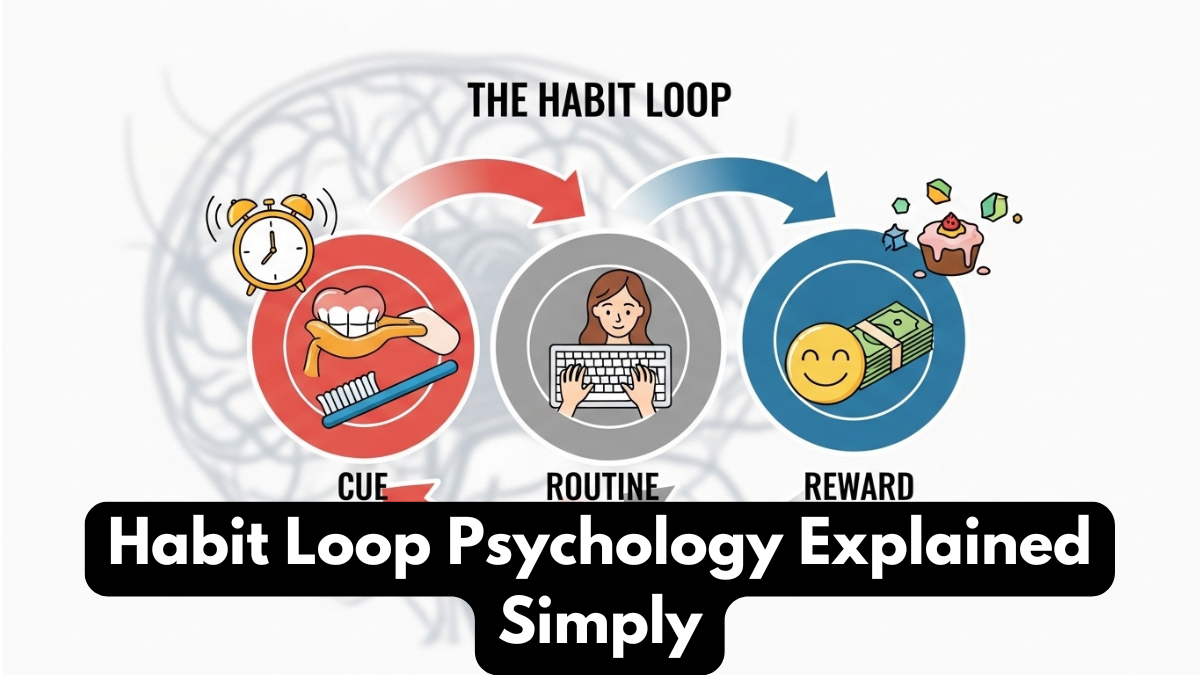
The concept of habit loop psychology explains that most habits follow a simple three-step cycle: cue, routine, and reward. This system repeats again and again until the behavior becomes automatic.
The cue is the trigger that starts the habit. It could be stress, boredom, time of day, or a specific environment. The routine is the actual behavior—like eating junk food, checking social media, or going for a walk. The reward is the benefit your brain receives, such as pleasure, relief, or satisfaction.
This structure is the foundation of habit science because it shows why habits feel so automatic. Real behavior change happens when people identify the cue and reward, then replace the routine with something better.
Understanding habit loop psychology helps people stop fighting habits blindly and start changing them strategically.
Why Behavior Change Is Difficult
Many people think breaking habits only requires discipline, but real behavior change is more complex. The brain prefers familiar patterns because they save energy and reduce decision-making stress.
This is why bad habits often feel easier than good ones. Scrolling social media gives instant reward, while exercise requires effort before the reward appears. Habit loop psychology explains that the brain naturally repeats what feels rewarding fastest.
Another reason change feels difficult is unclear triggers. People may say they snack too much, but the real cue might be boredom, loneliness, or work stress. Without understanding the full loop, lasting behavior change becomes difficult.
This is where strong habit science helps. It shifts the focus from motivation to systems, making change more realistic and sustainable.
Table Showing Habit Loop Examples
| Cue | Routine | Reward |
|---|---|---|
| Stress after work | Eating junk food | Comfort and relaxation |
| Morning alarm | Checking phone immediately | Quick stimulation |
| Feeling tired | Drinking coffee | Temporary energy boost |
| Study pressure | Watching short videos | Escape from discomfort |
| Evening boredom | Online shopping | Excitement and dopamine |
| Gym clothes visible | Going for workout | Progress and satisfaction |
This table shows how habit loop psychology works in daily life. Strong habit science helps identify these patterns so real behavior change becomes possible instead of frustrating.
How to Replace Bad Habits with Better Ones
The goal of habit loop psychology is not just removing bad habits—it is replacing them with stronger routines. Completely removing a habit is difficult because the brain still wants the same reward.
For example, if stress leads to unhealthy snacking, replacing the routine with a short walk or tea break may provide a similar emotional reward. This creates smarter behavior change without fighting the brain too aggressively.
Another effective method from habit science is making good habits easier. Keeping a water bottle visible increases hydration. Placing books near your bed improves reading habits. Environment often shapes behavior more than motivation.
Small changes repeated daily create stronger results than dramatic one-time efforts. This is why habit loop psychology focuses on systems, not sudden willpower.
Common Mistakes People Make During Habit Change
One major mistake is trying to change too many habits at once. People often create unrealistic plans and fail quickly. Strong behavior change works better when one habit is improved at a time.
Another problem is depending only on motivation. Motivation changes daily, but systems remain stable. Good habit science focuses on structure, environment, and repetition rather than emotional energy.
Ignoring rewards is also a mistake. If a new habit feels only difficult and never satisfying, the brain resists it. Positive reinforcement matters greatly in habit loop psychology.
People also quit too early. Habits take time to feel natural. Consistency matters more than perfection during the process of long-term behavior change.
How Habit Science Improves Productivity and Mental Health
Better habits improve much more than daily discipline—they affect emotional stability, confidence, and personal growth. Strong morning routines, sleep habits, exercise consistency, and focused work systems all come from effective habit loop psychology.
Students use these ideas to improve study consistency. Professionals use them for time management and productivity. People improving mental health use habit science to build sleep routines, journaling habits, and stress management practices.
Even confidence improves through repeated positive actions. Small wins create trust in yourself, and this strengthens future behavior change.
The power of habits is not in one big moment—it is in repeated small actions that quietly shape your life over time.
Conclusion
Success is often less about talent and more about repeated behavior. That is why understanding habit loop psychology is so powerful. It helps people stop relying only on motivation and start building systems that support real growth.
Through stronger behavior change and practical habit science, people can improve health, productivity, focus, and emotional well-being without extreme pressure. Identifying cues, replacing routines, and protecting rewards creates habits that actually last.
In 2026, self-improvement is becoming smarter, not harder. The best long-term results come from small daily choices, and habit loop psychology gives people the structure to make those choices consistently and successfully.
FAQs
What is habit loop psychology?
Habit loop psychology is the system of cue, routine, and reward that explains how habits are formed and repeated automatically in daily life.
Why is behavior change so difficult?
Behavior change feels difficult because the brain prefers familiar routines that provide fast rewards, even if they are unhealthy or unproductive.
How does habit science help break bad habits?
Habit science helps by identifying the trigger behind the habit and replacing the routine while keeping a similar reward, making change more sustainable.
Can small habits really create big results?
Yes, small repeated actions create strong long-term impact. This is one of the main principles of habit loop psychology and lasting personal improvement.
Is motivation enough for changing habits?
No, motivation alone is unreliable. Strong behavior change depends more on systems, environment, and consistency than temporary motivation.
Click here to know more.