AI resume screening has rapidly become a standard tool in modern recruitment as organizations attempt to manage high application volumes and accelerate hiring decisions. By automating resume review, ranking candidates, and filtering applicants based on predefined criteria, AI resume screening promises efficiency, cost reduction, and consistency. For employers facing intense competition for talent, these systems appear to offer a scalable solution to long-standing hiring challenges.
However, as adoption grows, AI resume screening is attracting increased legal and regulatory attention. Concerns about fairness, transparency, and accountability have brought these tools under scrutiny from regulators, courts, and advocacy groups. At the center of the debate are issues related to discrimination, evolving hiring laws, and the difficulty of ensuring ongoing compliance in algorithm-driven hiring processes.
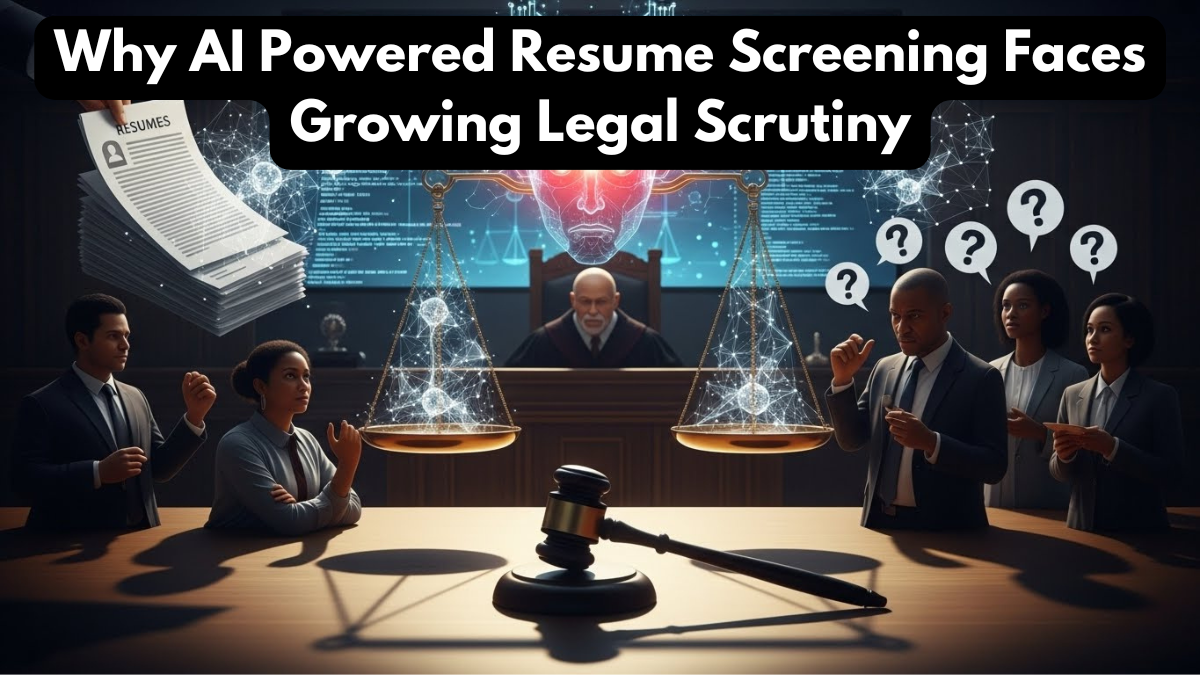
How AI resume screening works in modern recruitment
Most AI resume screening systems rely on machine learning models trained on historical hiring data. These tools analyze resumes for keywords, experience patterns, education, and skills, then rank or filter candidates accordingly. In theory, this approach reduces human bias and speeds up decision-making by focusing on job-related criteria.
In practice, AI resume screening reflects the data it is trained on. If historical hiring decisions favored certain groups or backgrounds, the algorithm may replicate those patterns. This creates legal risk, particularly when outcomes appear to disadvantage protected groups. As employers rely more heavily on automation, ensuring alignment with hiring laws becomes increasingly complex.
Discrimination risks and algorithmic bias
A major driver of legal scrutiny is the potential for discrimination in AI-driven hiring decisions. Even when an employer does not intend to discriminate, AI resume screening tools can produce biased outcomes if they learn from skewed data. For example, algorithms may downgrade resumes from candidates with nontraditional career paths or penalize gaps that disproportionately affect certain demographics.
Unlike human bias, algorithmic discrimination can be harder to detect and explain. Candidates rejected by AI resume screening systems often receive little insight into how decisions were made. This lack of transparency raises red flags under anti-discrimination frameworks embedded in many hiring laws. Regulators are increasingly questioning whether automated tools can meet the same fairness standards required of human decision-makers.
Hiring laws and regulatory responses
As AI resume screening becomes more widespread, governments are updating hiring laws to address automated decision-making. Some jurisdictions now require employers to disclose when AI tools are used in recruitment, while others mandate regular audits to assess bias and fairness. These legal developments reflect growing concern that traditional employment laws may not adequately cover algorithm-driven systems.
From a legal standpoint, employers remain responsible for outcomes produced by AI resume screening, even when third-party vendors provide the technology. Failure to comply with updated hiring laws can result in fines, lawsuits, and reputational damage. This places pressure on organizations to understand how these tools function rather than treating them as black boxes.
Compliance challenges for employers and vendors
Maintaining compliance with employment regulations is one of the most difficult aspects of using AI resume screening. Algorithms evolve over time as they process new data, meaning a system that was compliant at launch may drift into risky territory. Continuous monitoring and testing are required to ensure ongoing compliance with anti-discrimination standards.
Employers must also manage compliance across multiple jurisdictions, each with its own regulatory expectations. This complexity increases for global organizations using AI-driven recruitment platforms. Vendors offering AI resume screening solutions are increasingly expected to provide documentation, audit trails, and explainability features to support employer compliance efforts.
Key legal concerns surrounding AI resume screening include:
- Risk of unintentional discrimination
- Limited transparency in automated decisions
- Evolving hiring laws governing AI use
- Shared liability between employers and vendors
- Ongoing compliance monitoring requirements
The table below compares traditional resume screening with AI-driven screening from a legal perspective:
| Aspect | Traditional Screening | AI Resume Screening |
|---|---|---|
| Decision maker | Human recruiter | Algorithm-driven |
| Bias detection | Observable | Harder to identify |
| Transparency | Explainable | Often opaque |
| Hiring laws exposure | Established | Rapidly evolving |
| Compliance management | Manual oversight | Continuous auditing |
Long-term implications for recruitment practices
The legal scrutiny facing AI resume screening is reshaping how organizations approach recruitment technology. Rather than replacing human judgment entirely, many employers are moving toward hybrid models where AI supports but does not solely determine hiring decisions. This approach reduces discrimination risk while preserving efficiency.
Over time, clearer standards around compliance, transparency, and accountability are likely to emerge. Employers who proactively align AI resume screening with hiring laws and ethical best practices will be better positioned to manage legal risk. Those who adopt these tools without governance frameworks may face increasing challenges as enforcement intensifies.
Conclusion
In conclusion, AI resume screening faces growing legal scrutiny because it sits at the intersection of automation, employment rights, and accountability. Risks related to discrimination, rapidly evolving hiring laws, and complex compliance requirements have made automated hiring a focal point for regulators. While AI can improve efficiency, responsible use demands transparency, oversight, and ongoing evaluation. As legal frameworks mature, the future of AI resume screening will depend on balancing innovation with fairness and regulatory responsibility.
FAQs
What is AI resume screening?
AI resume screening uses algorithms to analyze and rank job applicants based on resume data.
Why is AI resume screening facing legal scrutiny?
It raises concerns about discrimination, transparency, and adherence to hiring laws.
Can AI resume screening violate hiring laws?
Yes, if it produces biased outcomes or lacks transparency, it may breach hiring laws.
Who is responsible for compliance when using AI resume screening?
Employers remain responsible for compliance, even if a third-party vendor provides the tool.
Will AI resume screening be banned?
Rather than bans, stricter regulation and compliance requirements are more likely as laws evolve.
Click here to know more.