As energy demand rises and climate challenges intensify, communities worldwide are exploring resilient and sustainable power solutions. One of the most transformative developments is the adoption of microgrid energy systems, localized networks that generate, store, and distribute electricity independently or alongside central grids. These systems enable neighborhoods, campuses, and rural areas to manage their own community energy resources efficiently. By reducing reliance on centralized utilities, decentralized power models improve resilience against outages, natural disasters, and infrastructure failures. By 2026, microgrids are expected to play a central role in sustainable energy transitions and community self-sufficiency.
The growing importance of microgrid energy systems reflects a broader shift toward distributed renewable energy. Solar panels, wind turbines, and battery storage technologies now allow communities to generate electricity locally. This localized community energy approach improves energy access in remote regions and enhances reliability in urban environments. Unlike traditional centralized grids, decentralized power networks allow communities to maintain essential services during disruptions. As climate events and grid instability increase, microgrids offer a resilient and environmentally responsible solution for modern energy needs.
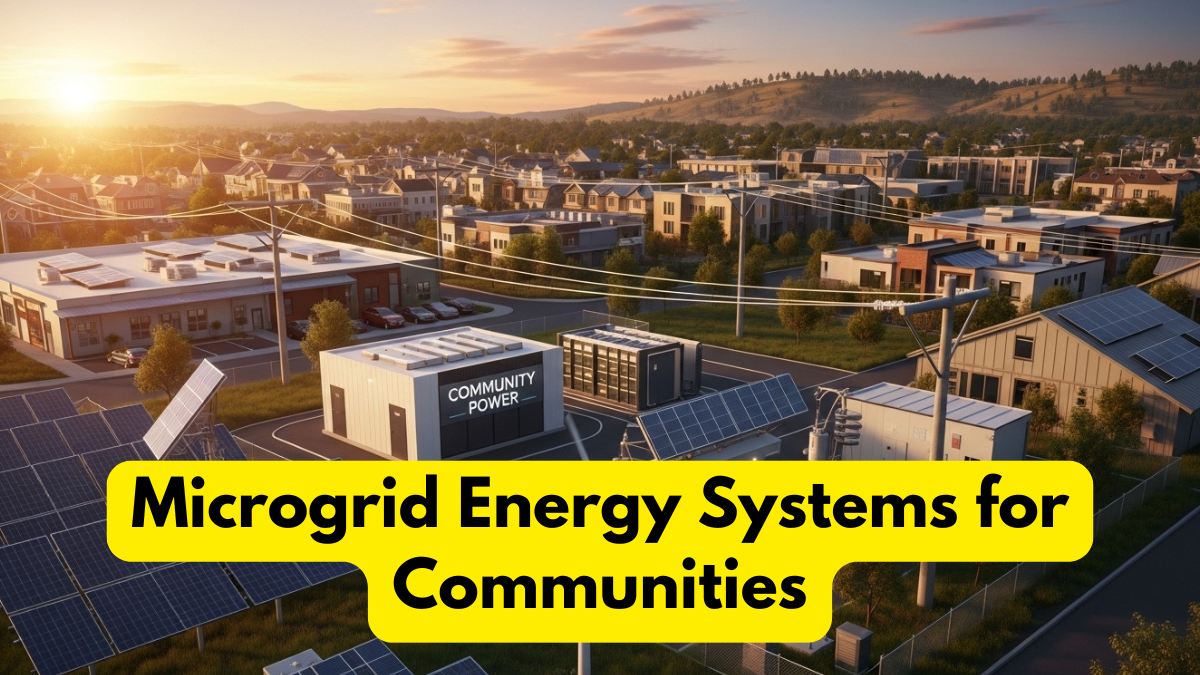
How Microgrid Energy Systems Work
At their core, microgrid energy systems are self-contained energy networks capable of operating independently from the main grid. They integrate renewable generation sources, storage systems, and control technologies to balance supply and demand locally. This structure enables continuous community energy availability even when the central grid fails. Intelligent control software manages energy flow within decentralized power systems to ensure efficiency and stability.
Key components of microgrid energy systems include:
- Local renewable energy sources such as solar or wind
- Battery energy storage systems
- Smart inverters and controllers
- Distribution infrastructure within the community
- Grid connection interface for hybrid operation
These elements allow community energy networks to operate autonomously or in coordination with the main grid. The flexibility of decentralized power ensures that energy generation and consumption remain balanced locally. As technology advances, microgrid energy systems are becoming more affordable and scalable for diverse communities.
Benefits of Microgrid Energy Systems for Communities
The adoption of microgrid energy systems offers significant advantages in reliability, sustainability, and economic resilience. Localized generation reduces transmission losses and improves efficiency. Additionally, community energy ownership empowers residents and organizations to control energy costs and sustainability goals. Decentralized power networks also enhance energy security during grid failures.
Major benefits of microgrid energy systems include:
- Improved resilience against outages and disasters
- Increased renewable energy adoption
- Reduced energy transmission losses
- Local energy independence and control
- Lower long-term energy costs
These advantages demonstrate how community energy initiatives strengthen both environmental and economic sustainability. By enabling localized production and consumption, decentralized power supports community autonomy and resilience. The expansion of microgrid energy systems is transforming how energy is generated and managed globally.
Applications of Microgrid Energy Systems
The versatility of microgrid energy systems allows implementation across diverse settings, from rural villages to urban districts. Remote communities benefit from independent community energy networks where central grid access is limited. In cities, microgrids support hospitals, campuses, and industrial zones through reliable decentralized power infrastructure.
Common applications of microgrid energy systems include:
- Rural electrification and remote communities
- University and hospital campuses
- Industrial and commercial parks
- Military and emergency facilities
- Urban residential districts
These use cases show how community energy solutions adapt to different scales and needs. By providing reliable decentralized power, microgrids ensure critical services remain operational during disruptions. The adaptability of microgrid energy systems makes them essential for modern energy planning.
Below is a comparison of centralized grids and microgrid systems:
| Feature | Centralized Grid | Microgrid Energy Systems |
|---|---|---|
| Energy generation | Distant large plants | Local renewable sources |
| Control | Utility-managed | Community energy control |
| Resilience | Vulnerable to outages | Decentralized power resilience |
| Transmission losses | High | Low |
| Renewable integration | Limited | High |
| Energy independence | Low | High |
This comparison highlights how microgrid energy systems enhance local autonomy and reliability. By prioritizing community energy and decentralized power, microgrids offer a sustainable alternative to traditional grids.
Challenges in Implementing Microgrid Energy Systems
Despite their benefits, microgrid energy systems face technical, financial, and regulatory challenges. Initial investment costs for renewable infrastructure and storage can be significant. Additionally, integrating community energy networks with existing utilities requires regulatory alignment. Ensuring stable operation of decentralized power systems also demands advanced control technologies and expertise.
Key challenges associated with microgrid energy systems include:
- High upfront installation costs
- Regulatory and policy barriers
- Technical complexity and maintenance
- Integration with central grid infrastructure
- Financing and community coordination
Addressing these challenges is essential for scaling community energy adoption. Governments and organizations are developing policies and incentives to support decentralized power deployment. As technology costs decline, microgrid energy systems are expected to become more accessible to communities worldwide.
Future Trends in Microgrid Energy Systems
The future of microgrid energy systems is closely tied to renewable energy innovation, digitalization, and energy storage advancements. Smart grid technologies will enable real-time optimization of community energy production and consumption. Peer-to-peer energy trading within decentralized power networks may allow households to exchange surplus electricity locally.
Emerging trends shaping microgrid energy systems include:
- AI-driven energy management systems
- Advanced battery storage technologies
- Peer-to-peer community energy trading
- Integration with electric vehicle infrastructure
- Renewable-powered smart cities
These innovations will transform decentralized power into a dynamic, interactive energy ecosystem. As adoption grows, microgrid energy systems will enable communities to become energy producers rather than consumers. The transition toward community energy autonomy represents a major shift in global energy systems.
Conclusion
By 2026, microgrid energy systems are emerging as a cornerstone of resilient and sustainable community infrastructure. Through localized community energy generation and decentralized power distribution, microgrids enhance reliability, efficiency, and environmental sustainability. While challenges related to cost and regulation remain, ongoing technological and policy advancements are accelerating adoption. As communities seek energy independence and climate resilience, microgrid energy systems offer a scalable solution that empowers local control and supports the global transition to renewable energy.
FAQ
What are microgrid energy systems?
Microgrid energy systems are localized energy networks that generate and distribute electricity independently or alongside the main grid.
How does community energy work in microgrids?
Community energy involves local generation and shared management of electricity resources within a neighborhood or region.
What is decentralized power?
Decentralized power refers to electricity generation and distribution occurring locally rather than from centralized plants.
Are microgrid energy systems sustainable?
Yes, microgrid energy systems often rely on renewable sources and reduce transmission losses, supporting sustainability.
Where are microgrid energy systems used?
They are used in rural areas, campuses, hospitals, industrial parks, and urban districts for reliable community energy supply.
Click here to know more.