The rise of the hyperlocal delivery services trend has changed how people access daily essentials, food, medicines, and local services across India. Consumers no longer depend only on large supermarkets or distant online sellers. Instead, they increasingly expect fast deliveries from nearby stores, pharmacies, restaurants, and local businesses within minutes or a few hours. This growing demand for neighborhood delivery reflects changing customer expectations and a stronger focus on convenience. At the same time, this shift is creating a new logistics trend that is transforming local commerce.
Earlier, local shopping mainly meant physically visiting nearby stores or depending on traditional home delivery by known shopkeepers. Today, app-based platforms and digital ordering systems have made the hyperlocal delivery services trend much faster and more organized. Whether it is groceries, urgent medicines, or small electronics, customers now expect immediate fulfillment from businesses located close to them. This model is strengthening local economies while changing how delivery networks operate.
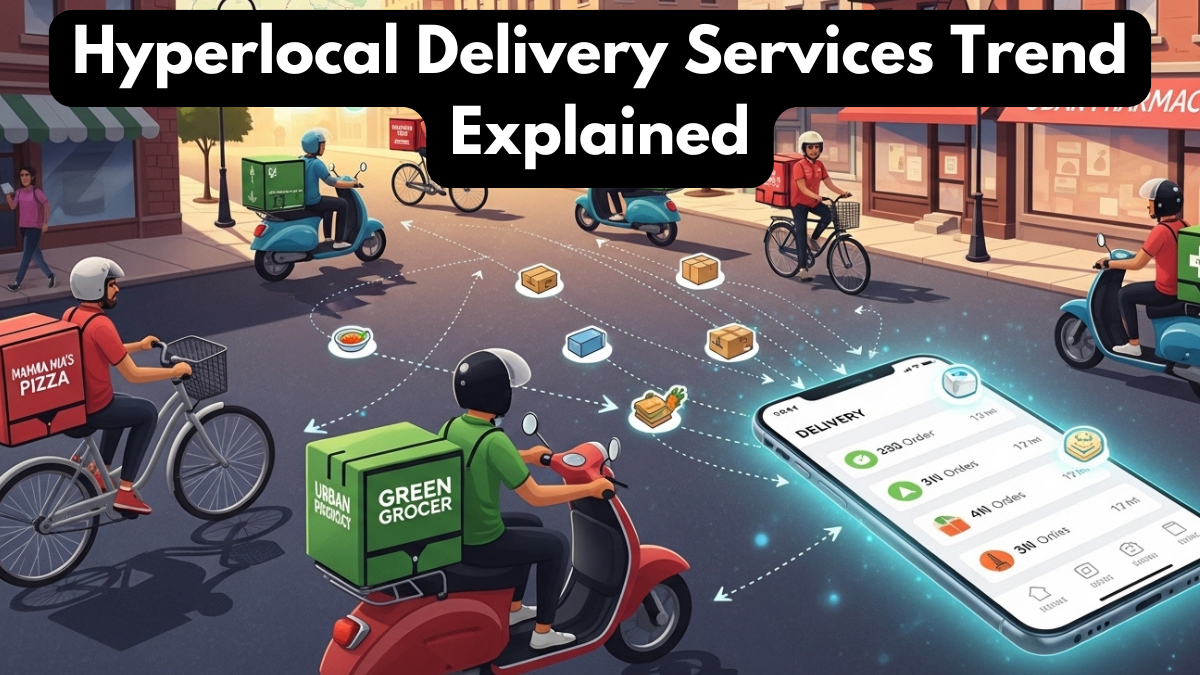
Why Hyperlocal Delivery Services Trend Is Growing Rapidly
The biggest reason behind the hyperlocal delivery services trend is convenience. People want quick access to essential items without spending time traveling, waiting in stores, or planning large shopping trips. This is especially valuable for working professionals, elderly residents, and families managing busy schedules. Fast neighborhood delivery saves time and makes local purchasing more efficient.
Another major reason is the improvement in delivery technology and route management. GPS tracking, mobile apps, digital payments, and real-time inventory updates support smoother operations. This stronger logistics trend allows businesses to serve customers faster while maintaining order accuracy. Small local shops can now compete with large e-commerce platforms by offering same-day or even same-hour service, strengthening the hyperlocal delivery services trend even further.
How Neighborhood Delivery Is Changing Consumer Habits
The expansion of neighborhood delivery is changing how people shop and plan household purchases. Consumers are shifting from large planned shopping trips to smaller, more frequent orders based on immediate needs.
Some major behavioral changes include:
- Ordering groceries multiple times a week instead of monthly bulk buying
- Increased dependence on app-based medicine and pharmacy delivery
- Higher demand for instant food and restaurant deliveries
- Reduced visits to nearby physical stores for basic essentials
- Greater trust in local vendors using digital ordering platforms
- Stronger preference for convenience over traditional shopping routines
These patterns show how the hyperlocal delivery services trend is influencing daily life. The broader logistics trend is making local supply faster and more customer-focused than ever before.
Comparison Between Traditional Local Shopping and Hyperlocal Delivery
The benefits of the hyperlocal delivery services trend become clearer when compared with older shopping methods.
| Aspect | Traditional Local Shopping | Hyperlocal Delivery |
|---|---|---|
| Purchase Method | Physical store visit | App or call-based order |
| Delivery Speed | Self-managed or delayed | Fast same-day delivery |
| Convenience | Requires travel and time | Doorstep access |
| Payment Options | Mostly cash-based | UPI, cards, wallets |
| Product Availability | Limited by visit timing | Real-time digital access |
| Customer Reach | Local walk-in customers | Wider neighborhood coverage |
This table explains why neighborhood delivery is becoming more popular in urban and semi-urban areas. The stronger logistics trend supports both customer satisfaction and business growth.
Impact on Small Businesses and Local Markets
The hyperlocal delivery services trend is creating major opportunities for local businesses. Kirana stores, pharmacies, bakeries, and service providers can now reach more customers without needing large physical expansions. Digital visibility and quick neighborhood delivery help small businesses compete with national brands.
This also improves customer loyalty because buyers prefer trusted local sellers who offer faster service. The growing logistics trend supports stronger local economies by keeping spending within neighborhoods rather than shifting it entirely to large e-commerce companies.
At the same time, businesses must manage stock accuracy, delivery staff, and customer expectations carefully. Speed alone is not enough—reliability and product quality remain equally important for long-term success in the hyperlocal delivery services trend.
Challenges in Hyperlocal Delivery Operations
Despite its success, the hyperlocal delivery services trend also faces practical challenges. Maintaining fast delivery requires strong coordination between stores, delivery staff, and technology systems. Small businesses may struggle with inventory tracking and workforce management.
Traffic congestion, weather conditions, and delivery partner availability can affect neighborhood delivery speed and customer satisfaction. In highly competitive markets, businesses may also face pressure to offer unrealistically fast delivery times.
The growing logistics trend must also address worker safety and fair compensation. Delivery staff often face high pressure, especially during peak demand hours. Sustainable growth requires balancing speed, profitability, and responsible service standards.
Conclusion
The hyperlocal delivery services trend reflects how convenience and speed are becoming central to modern shopping behavior in India. Stronger neighborhood delivery systems are helping customers save time while supporting local businesses and improving access to daily essentials. At the same time, the expanding logistics trend is reshaping how local commerce operates in both cities and smaller towns.
As digital adoption continues to grow, hyperlocal delivery will remain a major part of retail and service industries. The future of local shopping will depend on balancing fast service, operational efficiency, and strong customer trust to create a smarter and more connected delivery ecosystem.
FAQs
What does hyperlocal delivery services trend mean?
The hyperlocal delivery services trend refers to the growing system of delivering products and services from nearby local stores and businesses directly to customers within a short time.
Why is neighborhood delivery becoming popular?
Neighborhood delivery is becoming popular because it offers faster service, greater convenience, and easier access to daily essentials without requiring customers to visit physical stores.
How does logistics trend support hyperlocal delivery?
The modern logistics trend supports hyperlocal delivery through GPS tracking, real-time inventory systems, digital payments, and faster route planning for efficient service.
Are small businesses benefiting from hyperlocal delivery?
Yes, local shops and service providers benefit from the hyperlocal delivery services trend because it helps them reach more customers, improve sales, and compete with larger online platforms.
Click here to know more.