Water has always been essential for the survival and growth of civilizations. Thousands of years ago, ancient societies developed advanced methods to collect, transport, and store water in some of the world’s harshest environments. The discovery of ancient water systems still working today continues to amaze historians, archaeologists, and engineers because many of these structures remain functional after centuries of use. These systems demonstrate the brilliance of ancient builders and the lasting power of historical engineering.
From Roman aqueducts to underground Persian canals and ancient Indian stepwells, civilizations across the world created sustainable water solutions long before modern plumbing systems existed. These engineering achievements allowed cities to grow, supported agriculture, improved sanitation, and helped populations survive droughts and environmental challenges.
The study of ancient water systems still working reveals how ancient societies understood geography, gravity, and construction techniques with incredible precision. Many modern engineers continue studying these systems to learn sustainable water management practices that could still benefit the modern world today.
Why Ancient Civilizations Built Advanced Water Systems
The development of ancient water systems still working began because growing populations required reliable water supplies for farming, drinking, sanitation, and trade. Ancient civilizations often settled near rivers, but as cities expanded, transporting water efficiently became increasingly important.
Many societies faced harsh climates and seasonal droughts, forcing them to develop creative solutions. Through advanced historical engineering, ancient builders designed canals, reservoirs, wells, dams, and aqueducts capable of moving water across long distances.
These systems served several important purposes:
- Drinking water supply
- Agricultural irrigation
- Public baths and sanitation
- Flood control
- Religious ceremonies
- Industrial and mining activities
The ability to control water resources allowed civilizations to become wealthier and more stable. Some empires even based their political power on successful water management systems.
The success of ancient water systems still working today proves how carefully these structures were planned and constructed.
Famous Ancient Water Systems Around the World
Many ancient civilizations developed impressive water infrastructure that continues functioning even in modern times. These remarkable systems highlight the advanced knowledge of historical engineering possessed by ancient builders.
| Water System | Civilization | Location | Unique Feature |
|---|---|---|---|
| Roman Aqueducts | Ancient Rome | Europe | Gravity-based water transport |
| Qanats | Persian Empire | Iran | Underground water tunnels |
| Stepwells | Ancient India | India | Multi-level water storage |
| Dujiangyan Irrigation System | Ancient China | China | Flood control and irrigation |
| Nazca Puquios | Nazca Civilization | Peru | Spiral underground water channels |
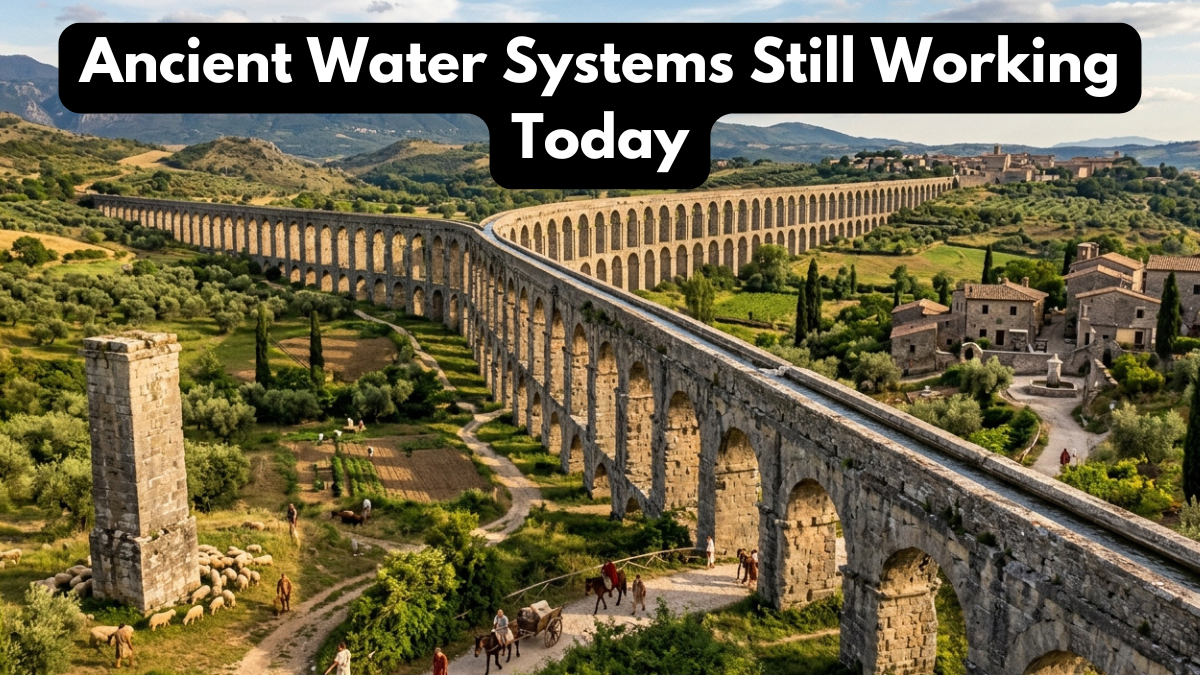
Roman aqueducts remain among the most famous examples of ancient engineering. These massive structures transported fresh water from distant mountains into crowded cities using carefully calculated slopes and gravity systems.
Similarly, Persian qanats are remarkable examples of ancient water systems still working because they continue supplying water in dry desert regions after thousands of years. These underground tunnels reduced water evaporation and provided sustainable access to groundwater.
The Dujiangyan Irrigation System in China is another outstanding achievement of historical engineering that still helps manage water flow and agricultural irrigation today.
How Ancient Aqueducts Worked
The success of Roman aqueducts remains one of the greatest examples of historical engineering in human history. Roman engineers designed these systems to transport water over long distances without pumps or electricity.
Aqueducts relied mainly on gravity. Engineers carefully measured land elevation so water could flow naturally through channels, tunnels, and bridges. Some aqueducts stretched for dozens of kilometers and supplied water to major cities, baths, fountains, and farms.
The construction of ancient water systems still working required advanced planning and skilled labor. Roman builders used stone, concrete, and waterproof materials to create durable channels resistant to erosion and leakage.
Key components of Roman aqueduct systems included:
- Underground tunnels
- Stone bridges
- Water reservoirs
- Sedimentation tanks
- Distribution fountains
These systems helped improve public health and sanitation while supporting urban expansion across the Roman Empire.
The durability of many surviving aqueducts proves the remarkable quality of Roman engineering techniques. Some sections continue carrying water even after centuries of natural disasters and environmental changes.
Ancient Water Management and Sustainability
One reason ancient water systems still working remain impressive is their sustainability. Ancient builders often designed systems that worked with natural landscapes rather than against them. This allowed water systems to operate efficiently for generations with minimal environmental damage.
Many examples of historical engineering focused on water conservation. Persian qanats reduced evaporation by moving water underground, while Indian stepwells collected rainwater and groundwater for dry seasons.
Ancient civilizations also understood the importance of maintenance. Communities regularly cleaned canals, repaired tunnels, and monitored water quality. This long-term care helped many systems survive for centuries.
Several sustainable practices used in ancient water systems included:
- Gravity-based water flow
- Underground water storage
- Rainwater harvesting
- Natural filtration methods
- Seasonal flood management
Modern engineers now study these ancient methods to improve sustainable water management in regions facing climate challenges and water shortages.
The continued operation of many aqueducts and ancient canals demonstrates that some ancient technologies were remarkably efficient and environmentally friendly.
Historical Engineering That Influences Modern Systems
The influence of historical engineering can still be seen in modern infrastructure today. Many modern water distribution systems rely on principles first developed by ancient civilizations.
Roman aqueducts, for example, inspired modern pipeline systems and urban water planning. Ancient Chinese flood control methods continue influencing river management projects. Persian qanat systems are still studied as sustainable solutions for arid regions.
The study of ancient water systems still working also helps engineers understand how to build longer-lasting infrastructure. Ancient builders prioritized durability and environmental adaptation rather than short-term solutions.
Several lessons modern engineers learn from ancient systems include:
- Efficient gravity-based transport
- Sustainable water conservation
- Long-term structural durability
- Environmental adaptation
- Community maintenance systems
Modern cities facing droughts and water shortages increasingly recognize the value of ancient engineering wisdom.
Archaeologists and environmental researchers continue discovering new details about ancient hydraulic systems through excavations and digital mapping technologies. These discoveries reveal how advanced ancient societies truly were in understanding water management.
Challenges in Preserving Ancient Water Systems
Although many ancient water systems still working continue operating today, preservation remains a major challenge. Urban development, pollution, climate change, and tourism can damage fragile historical structures.
Some ancient aqueducts have collapsed due to earthquakes, erosion, or neglect. Others face threats from modern construction projects that disrupt historical sites.
Governments and preservation organizations work to protect these engineering landmarks because they represent important cultural and scientific achievements. Restoration projects often combine modern engineering techniques with traditional materials to maintain authenticity.
Protecting ancient water systems is important not only for historical reasons but also because many communities still depend on them for agriculture and local water supply.
The preservation of these systems ensures future generations can continue learning from the extraordinary achievements of ancient civilizations.
Conclusion
The remarkable story of ancient water systems still working demonstrates the intelligence, creativity, and technical skill of ancient civilizations. Through advanced historical engineering, societies around the world developed sustainable methods for transporting, storing, and conserving water long before modern technology existed.
From Roman aqueducts to Persian qanats and Chinese irrigation systems, these ancient structures continue inspiring engineers and historians today. Their durability and efficiency prove that ancient societies possessed a deep understanding of environmental adaptation and long-term planning.
As modern societies face growing water challenges, the study of ancient water systems still working may provide valuable lessons for creating sustainable infrastructure in the future. These ancient achievements remain powerful examples of human innovation and engineering excellence.
FAQs
What are ancient water systems?
Ancient water systems are engineering structures created by early civilizations to transport, store, and manage water supplies.
Why are Roman aqueducts famous?
Roman aqueducts are famous because they transported water over long distances using advanced gravity-based engineering.
Are ancient water systems still functioning today?
Yes, several ancient systems such as qanats, aqueducts, and irrigation networks still operate in some regions.
What is historical engineering?
Historical engineering refers to advanced construction and technical methods used by ancient civilizations.
Why are ancient water systems important today?
They provide valuable lessons about sustainability, water conservation, and durable infrastructure design.
Click here to know more.